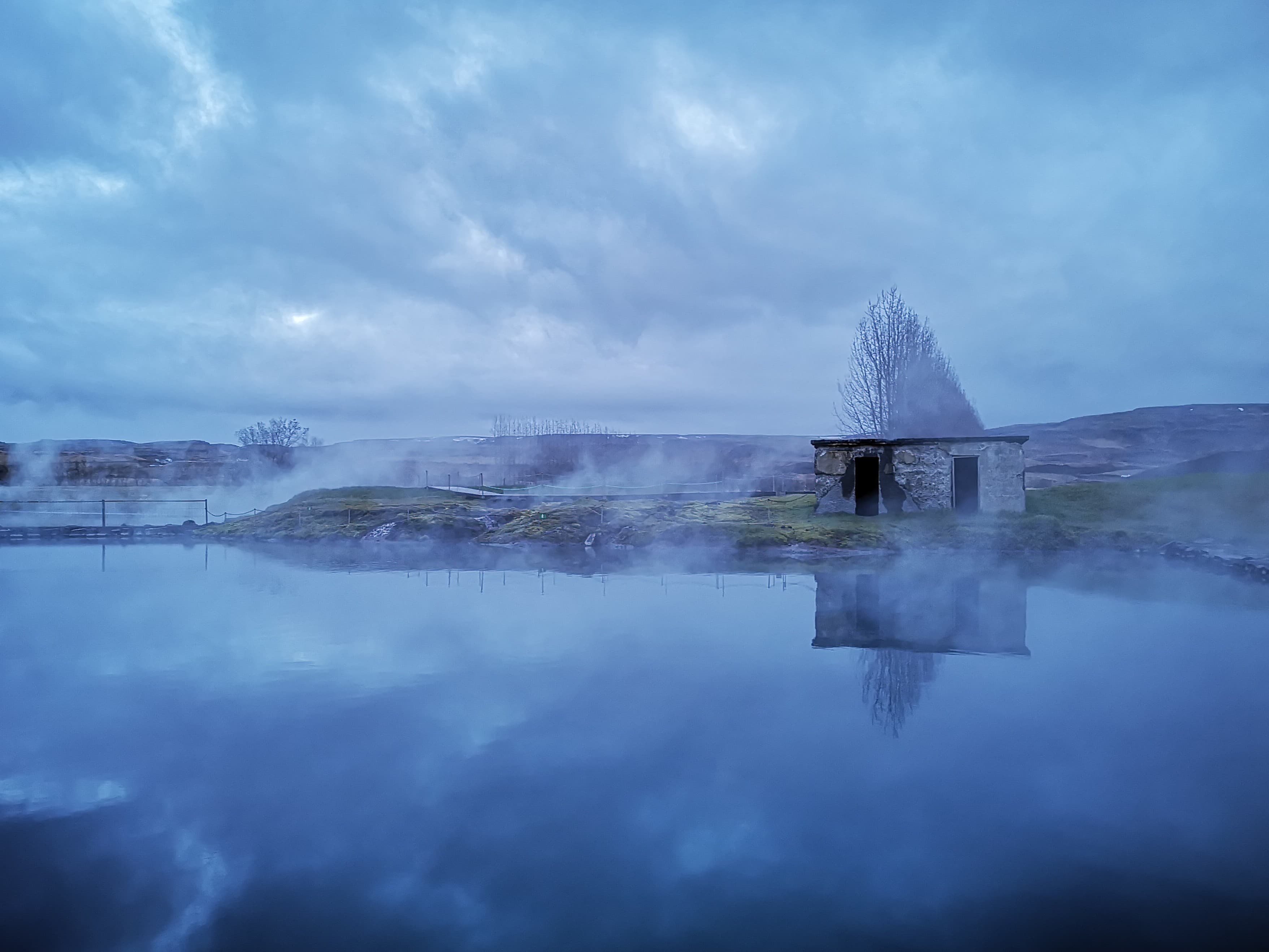
"The Secret Lagoon, Iceland" by kabell, licensed under CC BY 2.0.
Hot Springs Guide
Hot Springs in Iceland: The Complete Guide to Geothermal Pools & Lagoons
Iceland sits on the Mid-Atlantic Ridge, where the North American and Eurasian plates pull apart, and that geology turns the whole island into a natural spa. Geothermal water heats most Icelandic homes — and feeds everything from world-famous luxury lagoons to free, hand-built pools in the middle of nowhere.
This guide covers the full range: the premium lagoons you book in advance (Blue Lagoon, Sky Lagoon, Mývatn Nature Baths), the mid-priced local favourites (Secret Lagoon, Laugarvatn Fontana, Forest Lagoon), and the wild, free natural hot springs that reward a hike (Reykjadalur, Seljavallalaug, Hvammsvík). For each one below you'll find what it costs, where it is, and whether it's worth the detour.
10 hot springs in Iceland
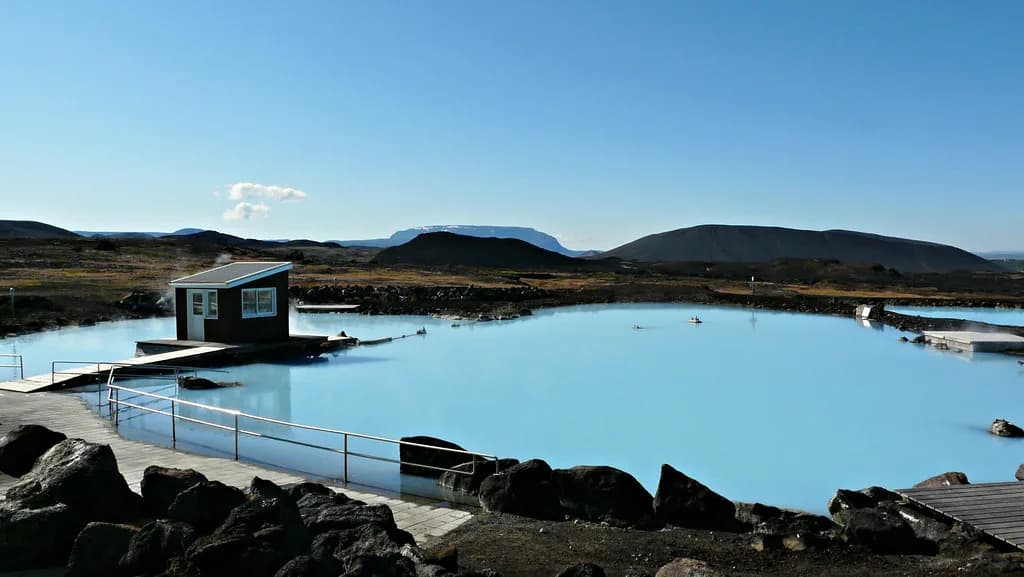
Mývatn Nature Baths
660, Mývatn, Iceland
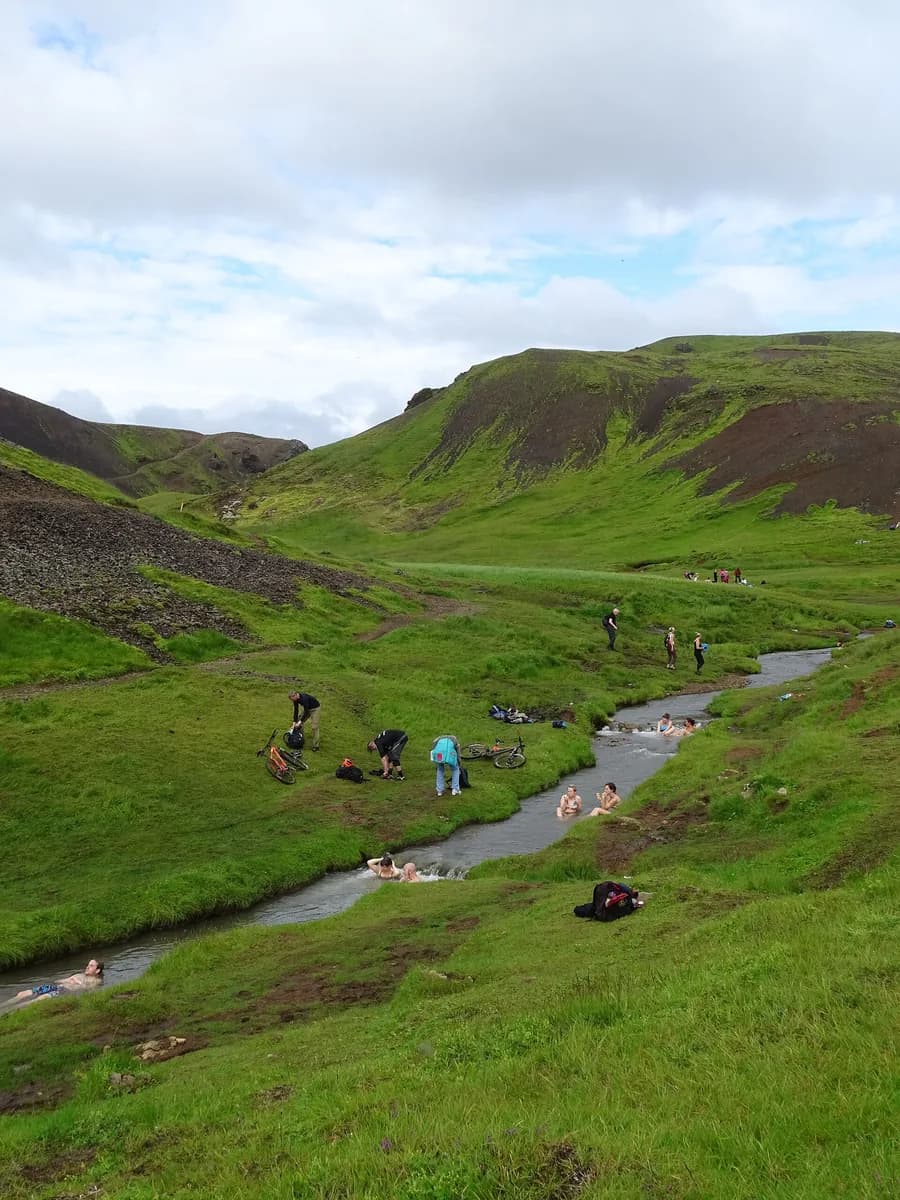
Reykjadalur Hot Spring Thermal River
Reykjadalur 816, 816, Iceland
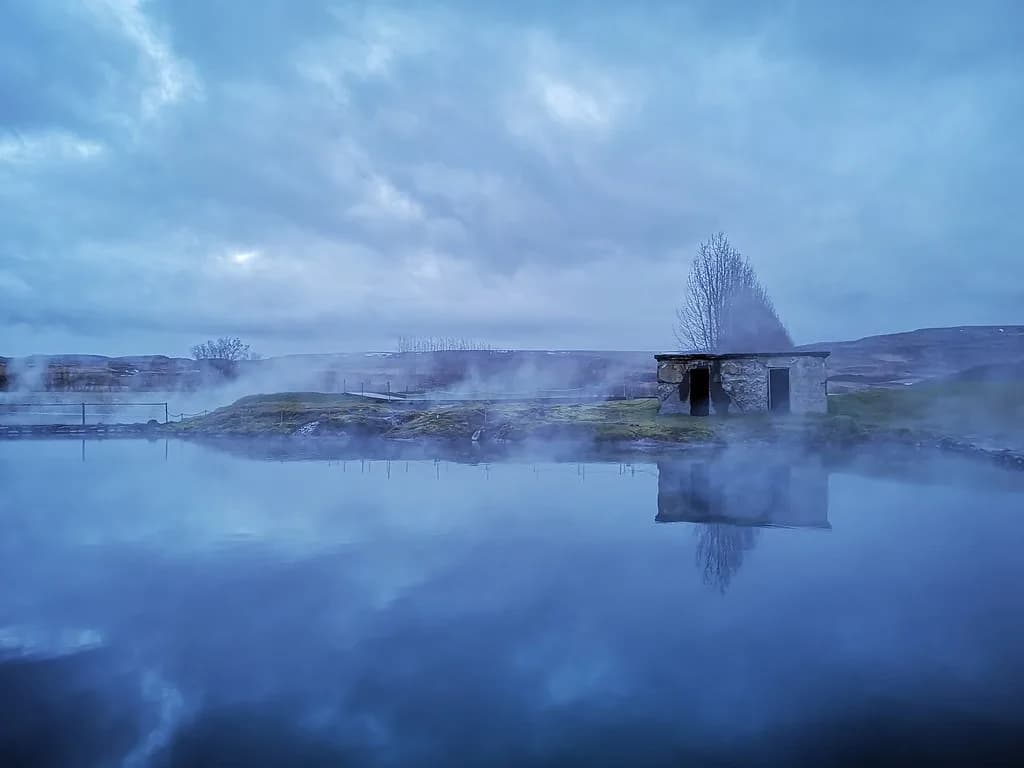
Secret Lagoon
Hvammsvegur, 845, Flúðir, Iceland
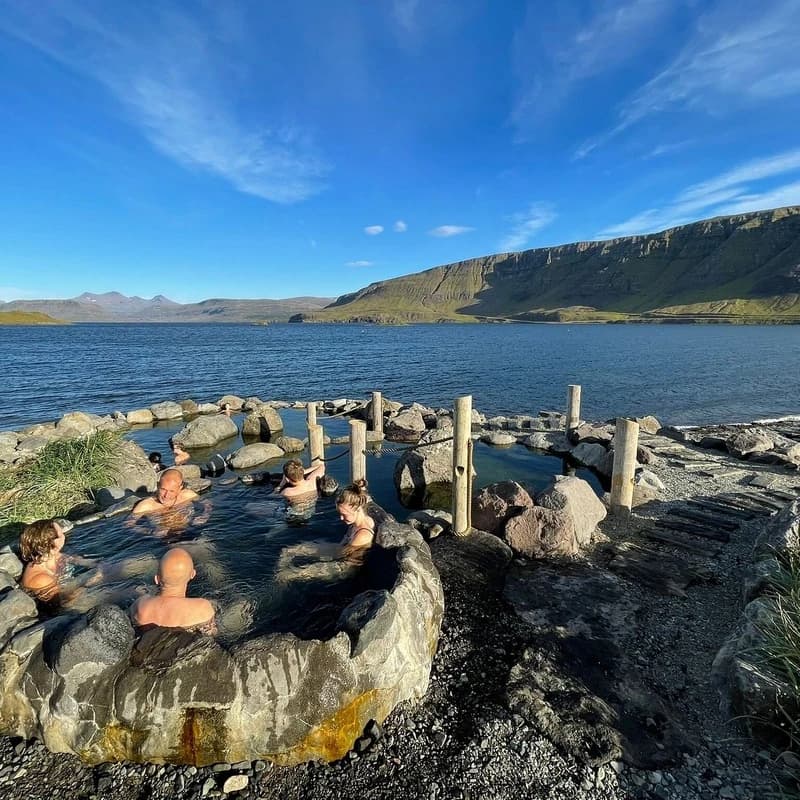
Hvammsvik Hot Springs
276, Mosfellsbær, Iceland
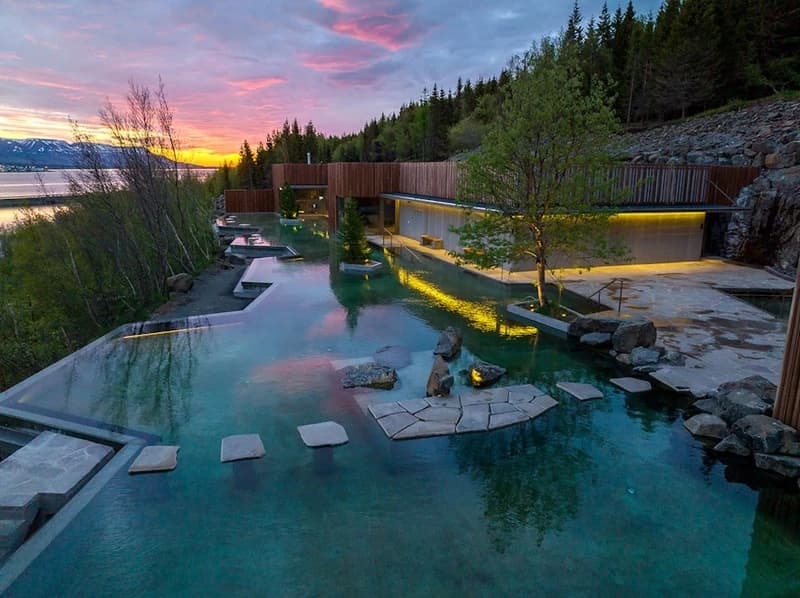
Forest Lagoon
Vaðlaskógur 605, 605, Akureyri, Iceland
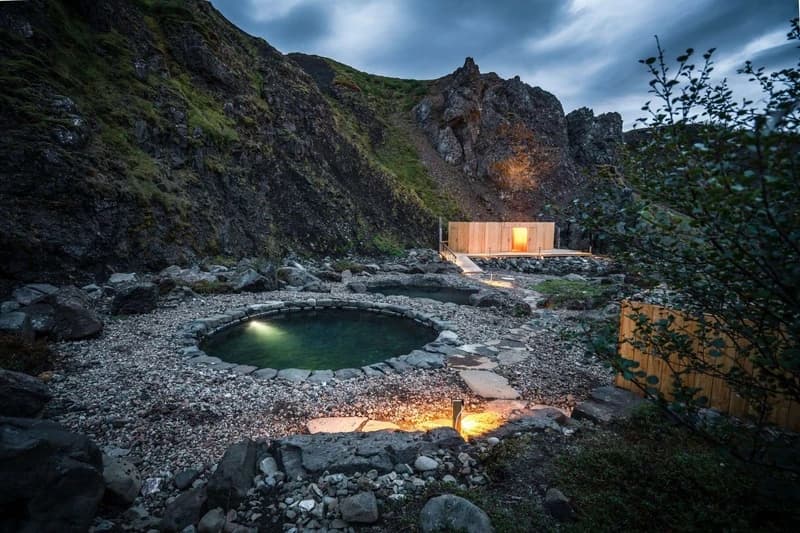
Laugarvatn Fontana
Laugarbraut, 840, Laugarvatn, Iceland
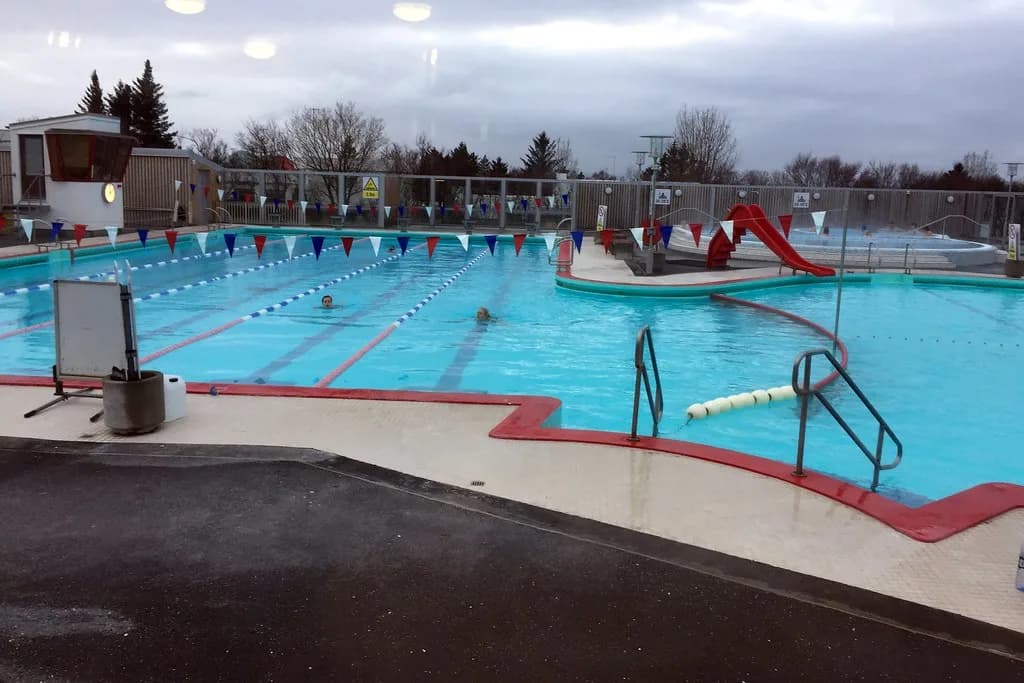
Vesturbæjarlaug
Hofsvallagata, 107, Reykjavík, Iceland
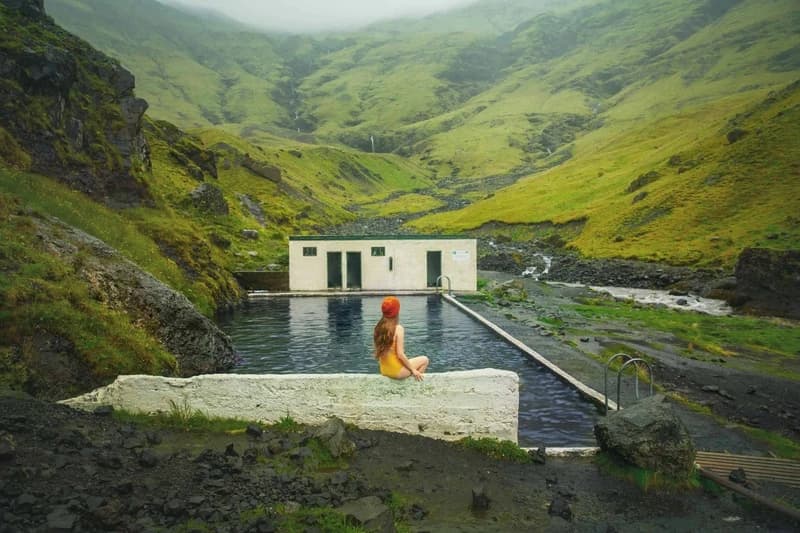
Seljavallalaug Swimming Pool
861, Evindarhólar, Iceland
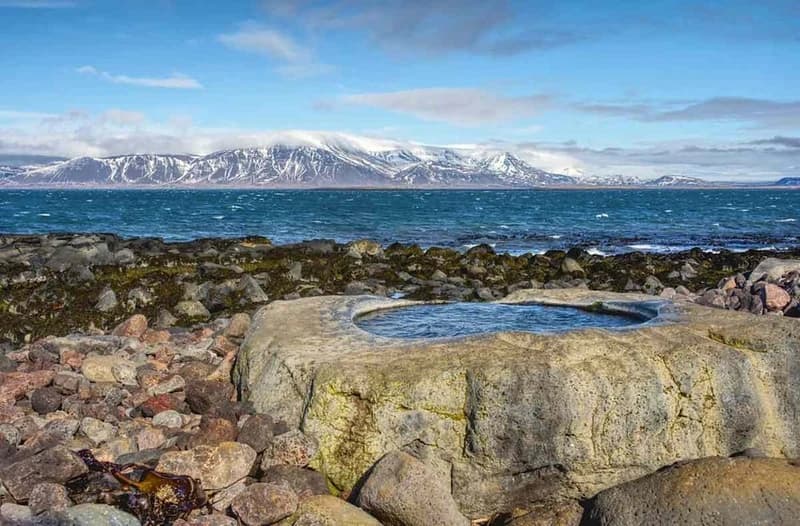
Kvika Footbath
170, Seltjarnarnes, Iceland
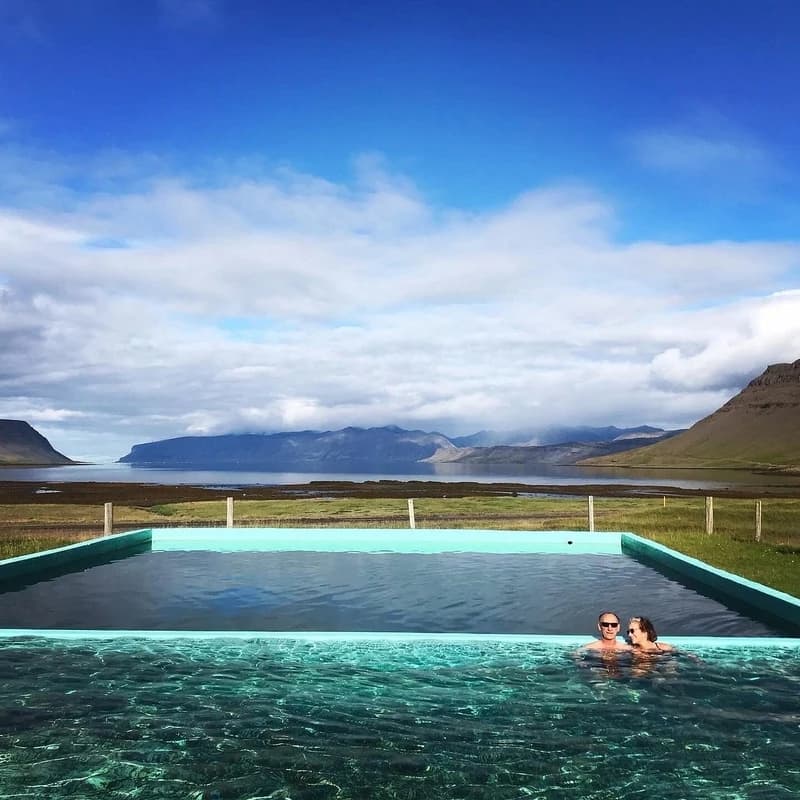
Reykjafjarðarlaug Hot Pool
466, Reykjarfjörður, Iceland
The famous premium lagoons (book ahead)
Blue Lagoon — Iceland's most photographed spot, a milky-blue silica lagoon 20 minutes from Keflavík airport and about 50 minutes from Reykjavík. It's man-made (fed by the nearby Svartsengi geothermal plant) but unforgettable. Tickets are timed and sell out — book days to weeks ahead, especially in summer. Expect the highest prices of any spring on this list.
Sky Lagoon — opened in 2021 just outside Reykjavík, with an infinity edge that blends into the North Atlantic. Its seven-step "Ritual" (sauna, cold plunge, steam, scrub) is the draw. Easier to reach from the city than the Blue Lagoon and increasingly the locals' recommendation for first-timers short on time.
Mývatn Nature Baths (rebranded Earth Lagoon in late 2025) — the "Blue Lagoon of the North," near Lake Mývatn in remote north Iceland. Far fewer crowds, lower prices, and surreal volcanic surroundings. Worth planning a Ring Road trip around.
Which Iceland lagoon should you book?
With so many options, the right choice usually comes down to the shape of your trip rather than the lagoon itself:
- Flying in or out of Keflavík? Book the Blue Lagoon. It's 20 minutes from the airport and the classic way to start or end a trip — drop your bags in its luggage storage between flight and lagoon.
- Based in Reykjavík with no car and want one easy soak? Choose Sky Lagoon. It's minutes from the city, and its seven-step Ritual makes it feel like a full spa visit without a day of logistics.
- Driving the Golden Circle? Add the Secret Lagoon in Flúðir or Laugarvatn Fontana — both sit right on the route, cost a fraction of the famous lagoons, and need no advance booking.
- Doing the Ring Road or heading north? Mývatn Nature Baths (north) or Forest Lagoon (near Akureyri) give you the premium-lagoon experience with a fraction of the crowds.
- Want it free and don't mind a hike? Reykjadalur's thermal river is the best wild soak near the capital.
If you only have time for one and you're city-based, Sky Lagoon is the more convenient choice — about 15 minutes from the centre versus roughly 50 to the Blue Lagoon; if it's your arrival or departure day, the Blue Lagoon is the natural pick.
Booking the premium lagoons: packages, timing & getting there
The Blue Lagoon and Sky Lagoon both use timed, advance-booked tickets that regularly sell out — walk-ins aren't accepted. Book days to weeks ahead, especially in summer. Both also use dynamic pricing, so early-morning and late-evening slots are noticeably cheaper than midday. The figures below are starting prices as of this guide's update; expect them to climb at busy times.
Blue Lagoon packages step up in comfort:
- Comfort (from roughly US$95) — entry, a silica mask, one drink and a towel.
- Premium (from roughly US$120) — adds a bathrobe and two extra face masks plus a small take-home silica mask (still one drink).
- Signature — adds a second drink and a larger take-home Blue Lagoon skincare set.
- Retreat Spa — a separate, far pricier experience with a private lagoon and spa. Cancellation is typically free up to 24 hours before your slot, so there's little risk in booking early to lock in a cheaper time.
Sky Lagoon passes are simpler:
- Saman (from roughly US$110) — entry, towel and the full seven-step Ritual with public changing rooms. Some tour resellers rebrand this the "Pure" pass.
- Sér — the same Ritual with a private, premium changing suite.
Getting there without a car: you don't need to rent one. Both lagoons sell round-trip shuttle transfers from Reykjavík (about 50 minutes to the Blue Lagoon, 15 to Sky Lagoon), and Blue Lagoon transfers can be timed to connect with Keflavík airport for an arrival- or departure-day visit. The transfer is how most car-less visitors do it.
Free & natural hot springs (for the adventurous)
Reykjadalur Hot Spring Thermal River — a steaming river you bathe in, reached by a ~3 km uphill hike from Hveragerði (about 45 minutes from Reykjavík). Bathing is free (though there's now a paid car park at the trailhead), and it's the single best "wild" hot spring near the capital. Bring water shoes and a towel; there are simple boardwalk changing screens.
Seljavallalaug — one of Iceland's oldest pools (built 1923), tucked into a green valley on the south coast near Skógafoss. A short walk from the car park, free, and atmospheric — though the water is lukewarm and cleaned infrequently, so go for the setting, not a hot soak.
Hvammsvík Hot Springs — a collection of natural pools right at the ocean's edge in Hvalfjörður, about 45 minutes from Reykjavík. Tidal, so the experience shifts with the sea. Ticketed but far less polished and crowded than the big lagoons.
Reykjafjarðarlaug — a remote pool in the Westfjords, for travellers who want solitude and are already exploring Iceland's least-visited region.
Local geothermal pools & mid-range lagoons
Secret Lagoon (Gamla Laugin) — in Flúðir on the Golden Circle, this is Iceland's oldest swimming pool and a relaxed, natural-feeling soak at a fraction of Blue Lagoon prices. An easy add-on to a Golden Circle day.
Laugarvatn Fontana — geothermal baths on the shore of Lake Laugarvatn, also on the Golden Circle, where they bake rye bread in the hot ground. Steam rooms sit directly over bubbling vents. (The baths were closed for a renovation reopening, expanded, in June 2026.)
Forest Lagoon — a sleek newer lagoon set in birch woodland near Akureyri in the north, a relaxed pairing with a Ring Road or whale-watching trip.
Vesturbæjarlaug & the city pools — don't overlook Reykjavík's municipal swimming pools. Vesturbæjarlaug and Laugardalslaug are where Icelanders actually soak: geothermal hot-pots (heitir pottar) for the price of a coffee. The most authentic, affordable hot-spring experience in the country.
Kvika Footbath — a tiny free geothermal foot bath on the Reykjavík coastline near Grótta lighthouse; a quick, quirky stop rather than a full soak.
When to visit & what it costs
Iceland's hot springs are a year-round experience — many travellers prefer winter, when sitting in 38–40°C water under snow (or the Northern Lights) is the whole point. Summer brings the midnight sun and the easiest access to hiking-only springs like Reykjadalur.
Costs span a huge range: free for natural pools and ~ a few dollars for municipal city pools, mid-range for Secret Lagoon and Laugarvatn Fontana, and premium for Blue Lagoon and Sky Lagoon (often the equivalent of a nice dinner, and more with packages). Booking ahead online is essential for the premium lagoons and usually unnecessary for natural pools.
Hot-spring etiquette in Iceland (read before you go)
One rule trips up nearly every first-time visitor: you must shower naked, without a swimsuit, before entering any pool or lagoon. It's a strict hygiene norm because Icelandic pools use minimal chlorine. Communal shower areas are standard and non-negotiable.
A few more: rinse silica out of your hair after the Blue Lagoon (it dries hair out — tie long hair up), never bathe alone in remote wild springs, and always check water temperature before getting in — some natural springs are scalding. Leave no trace at free pools; their access depends on visitors respecting them.
Frequently asked questions
Are there free natural hot springs in Iceland?
Yes. Reykjadalur (a hikeable thermal river near Reykjavík), Seljavallalaug on the south coast, and Reykjavík's low-cost municipal pools are all free or nearly free. The famous Blue Lagoon and Sky Lagoon, by contrast, are premium ticketed lagoons.
Do I have to shower naked before Icelandic hot springs?
Yes — washing thoroughly without a swimsuit before entering is mandatory at all Icelandic pools and lagoons. It's a strict hygiene rule because the pools use very little chlorine.
What is the difference between the Blue Lagoon and Sky Lagoon?
The Blue Lagoon is the iconic milky-blue lagoon near the airport, 50 minutes from Reykjavík and the most expensive. Sky Lagoon is a newer oceanfront lagoon just outside Reykjavík, easier to reach from the city and known for its seven-step bathing ritual.
Can you visit Iceland's hot springs in winter?
Absolutely — winter is one of the best times. Bathing in warm geothermal water amid snow, and sometimes under the Northern Lights, is a signature Icelandic experience. The premium lagoons are open year-round.
Do you need to book Iceland's hot springs in advance?
For premium lagoons like the Blue Lagoon and Sky Lagoon, yes — they use timed tickets that frequently sell out, so book online ahead. Free natural pools and municipal swimming pools generally require no booking.
How do I get to the Blue Lagoon from Reykjavík without a car?
You don't need to rent a car. Round-trip shuttle transfers run from Reykjavík to the Blue Lagoon (about 50 minutes each way) and to Sky Lagoon (about 15 minutes). Transfers to the Blue Lagoon can also be timed to connect with Keflavík airport, and it's how most car-less visitors reach the lagoons.
Can I visit the Blue Lagoon on my arrival or departure day?
Yes, and it's a popular plan — the Blue Lagoon is only 20 minutes from Keflavík airport. There's luggage storage on site, and transfers can be timed around your flight, so you can soak between landing and heading into Reykjavík (or before flying home). Just book a time slot that fits your schedule, as entry is timed and sells out.